Aravis flees her arranged marriage
The Horse and His BoyAravis flees her arranged marriage by turning a plan imposed on her into the beginning of her own escape. The decision to marry her to Ahoshta Tarkaan leaves her grieving and desperate; Hwin’s intervention gives her a reason to live, and Aravis answers the threat not by submitting but by devising a careful deception. Her flight also carries a moral consequence: much later, Aslan tells her that the lion who wounded her was the one she met throughout her journey, and that the harm she endured answered the punishment visited on the slave she had drugged.
Marriage Arrangement and Despair
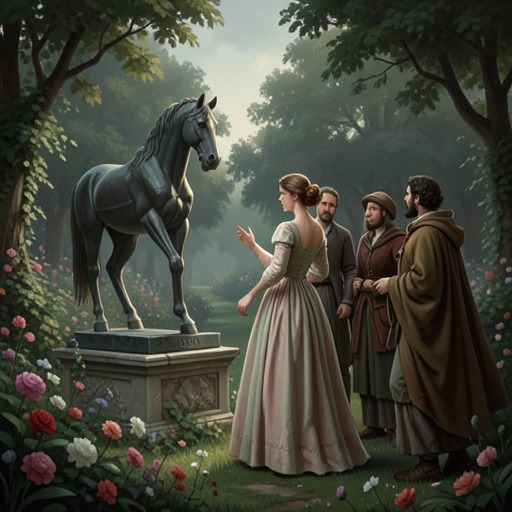
Aravis identifies herself as the only daughter of Kidrash Tarkaan, lord of Calavar, and gives her lineage as descent through Tarkaan and Tisroc ancestors to Tash. Her mother is dead; her father has remarried, and one of Aravis’s brothers has died fighting rebels in the far west while the other is still a child. Within this family, her stepmother’s hostility and influence over her father help determine Aravis’s future: her father offers her in marriage to Ahoshta Tarkaan.
Ahoshta is described as low-born but newly powerful, having won the Tisroc’s favor through flattery and counsel. He rules many cities and may become Grand Vizier; he is also at least sixty years old. The arrangement is accepted, with the wedding expected at midsummer that same year. When she hears the news, Aravis grieves for a day. On the next, she rides out alone on Hwin with a dagger, intending to die rather than enter the marriage. Her account makes clear that the crisis is not a passing reluctance: she sees death as preferable to the future her family has arranged.
Hwin’s Intervention and the Escape Plan
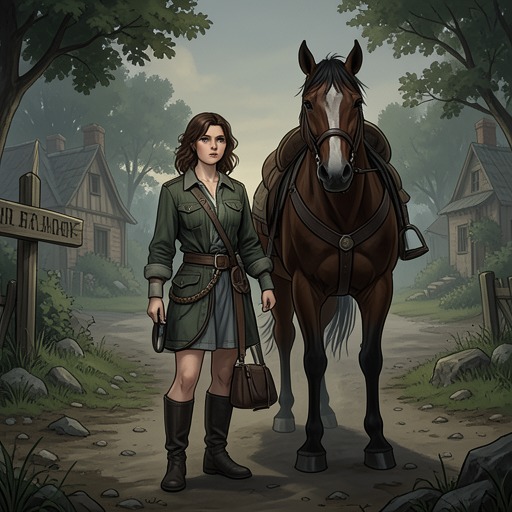
Before Aravis can act, Hwin speaks and urges her not to destroy herself, reminding her that life may still bring good fortune. Aravis initially doubts her own senses, then hears Hwin’s counsel again and asks how a mare learned human speech. Hwin explains that she was stolen from Narnia as a foal, describes that country, and tells Aravis that no maiden there is forced to marry against her will. The prospect restores Aravis’s hope and gives her escape a destination: she and Hwin agree to leave together.
Aravis returns home and performs delight at the proposed marriage, singing and dancing before her father. She asks permission to spend three days in the woods with a maiden, ostensibly to carry out the customary rites of Zardeenah before marriage. Her father agrees, believing the excuse. Once out of his presence, Aravis turns to his oldest slave, a secretary who had cared for her as a baby and loved her. She asks him to write a letter and swears him to secrecy. He weeps and urges her to reconsider, but finally complies; Aravis seals the letter and hides it against her person.
Her next deception is directed at the household. Aravis tells the maid assigned to accompany her that she should wake her early, then gives the maid wine mixed with a substance that will keep her asleep for a night and a day. Once the household has gone to sleep, Aravis puts on the armor of her dead brother, which she had kept in her chamber in his memory. She gathers all her money, selected jewels, and food, saddles Hwin herself, and rides away in the second watch of the night. Instead of heading for the woods where her father expects her to be, she travels north and east toward Tashbaan.
The Forged Letter and Delayed Pursuit
Aravis expects the deception to buy time. For three days or more, she believes her father will not search for her because he thinks she has gone to perform the promised rites. On the fourth day she and Hwin reach Azim Balda, a crossroads where the Tisroc’s postal riders depart for different parts of the empire. Aravis uses the privilege of the greater Tarkaans to send a message, paying the Chief of the Messengers five crescents.
The letter is made to appear to come from Ahoshta to Aravis’s father. It falsely claims that Ahoshta encountered Aravis in the woods after the rites, fell in love with her, and married her immediately; it also asks Kidrash to come quickly and bring her dowry. By inventing a marriage and appealing to the wealth and expenses of the supposed bridegroom, Aravis aims to divert her father into contacting Ahoshta or traveling to him. She rides on in haste, expecting to pass beyond Tashbaan before the false account is exposed. Her own summary of the plan ends with the flight’s immediate dangers: she is chased by lions and meets her companions while they are crossing salt water.
Aftermath and Moral Consequence
Aravis later recounts the escape to Shasta as part of the larger story of their flight. He hears not only how she left her father’s house but also of the group’s pursuit by lions and their desperate crossing of the water. When Shasta subsequently tells the mysterious Large Voice about the dangers he has endured, he includes the desert journey and the lion that wounded Aravis. The Voice identifies that lion as the same one who had pressed Shasta into joining Aravis and had intervened at other stages of his journey. It refuses to explain Aravis’s experience as though it belonged to Shasta’s story, insisting that each is being told their own.
Aslan later addresses Aravis directly. He confirms that he wounded her and explains the connection to her escape: the suffering she received was equal to the punishment laid on her stepmother’s slave because Aravis had drugged the maid. The escape therefore remains a deliverance from a forced marriage, but it is not presented as consequence-free. Aravis’s ingenuity and Hwin’s rescue preserve her life and freedom; the later reckoning makes her treatment of the household maid part of the event’s moral aftermath.